We are looking forward for the upcoming duo exhibition with these colorful artists! Welcome to vernissage Thursday 7th of May at 18:00.
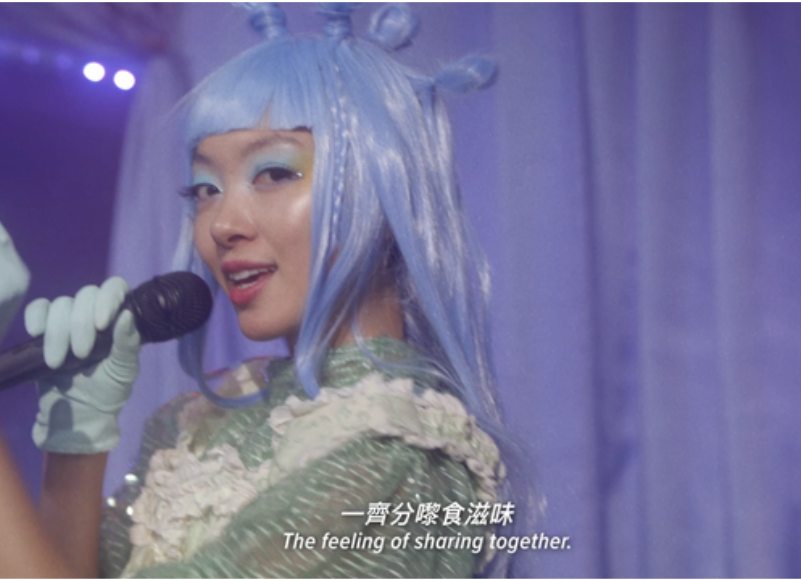
Yu Shuk Pui Bobby: The Translation of Pain within the world of Hemorrhoid Loans 《痔債》
The Translation of Pain is the first chapter of my ongoing exhibition series Hemorrhoid Loans /.
The larger series uses hemorrhoids as an entry point to think about chronic pain, shame, family history, care, labour, and the social conditions that teach us to endure discomfort silently. In Hemorrhoid Loans, a medical condition or an embarrassing bodily problem, is taken as a “body debt” — something accumulated, inherited, postponed, and repeatedly paid for through pain, labour, silence, and care.
The word “loans” points to a structure of debt. Who carries the pain? Who is expected to endure it? Who provides care? And whether such debt can ever be repaid or transformed. This series looks at how the body becomes a space where family expectations, medical systems, migration, emotional history, and social pressure are stored.
The Translation of Pain begins from the image of a therapy room. This room first appeared in my earlier piece The Piles We Carry, where two black chairs marked a therapeutic encounter: one side belonging to the therapist, with notes; the other side belonging to the patient, with tissues. Now, this therapy room is here reconstructed at a 1:1 scale using paper and wooden sticks. The use of paper makes the room fragile, provisional, and constructed. A place where the authority of therapy, medicine, and diagnosis could collapse or be rewritten.
This chapter is connected to my first day of arriving in Norway. On the day I moved here, I experienced a severe hemorrhoid flare-up and was diagnosed shortly after. Physical pain and shame entered my life in Norway almost simultaneously, pushing me into a long process of navigating both bodily treatment and psychological therapy. Over time, I began to understand the symptom not only as a medical issue, but as a signal — a way to read emotional pressure, family silence, intimacy, and power relations.
In The Translation of Pain, the therapy room, a place where pain moves from body to language, from Chinese to Norwegian or English, from private shame to shared structure, translations become visible. The telephone in the room functions as a translator, turning the conversation between therapist and patient into a triangular exchange shaped by distance, mistranslation, dependency, and authority.
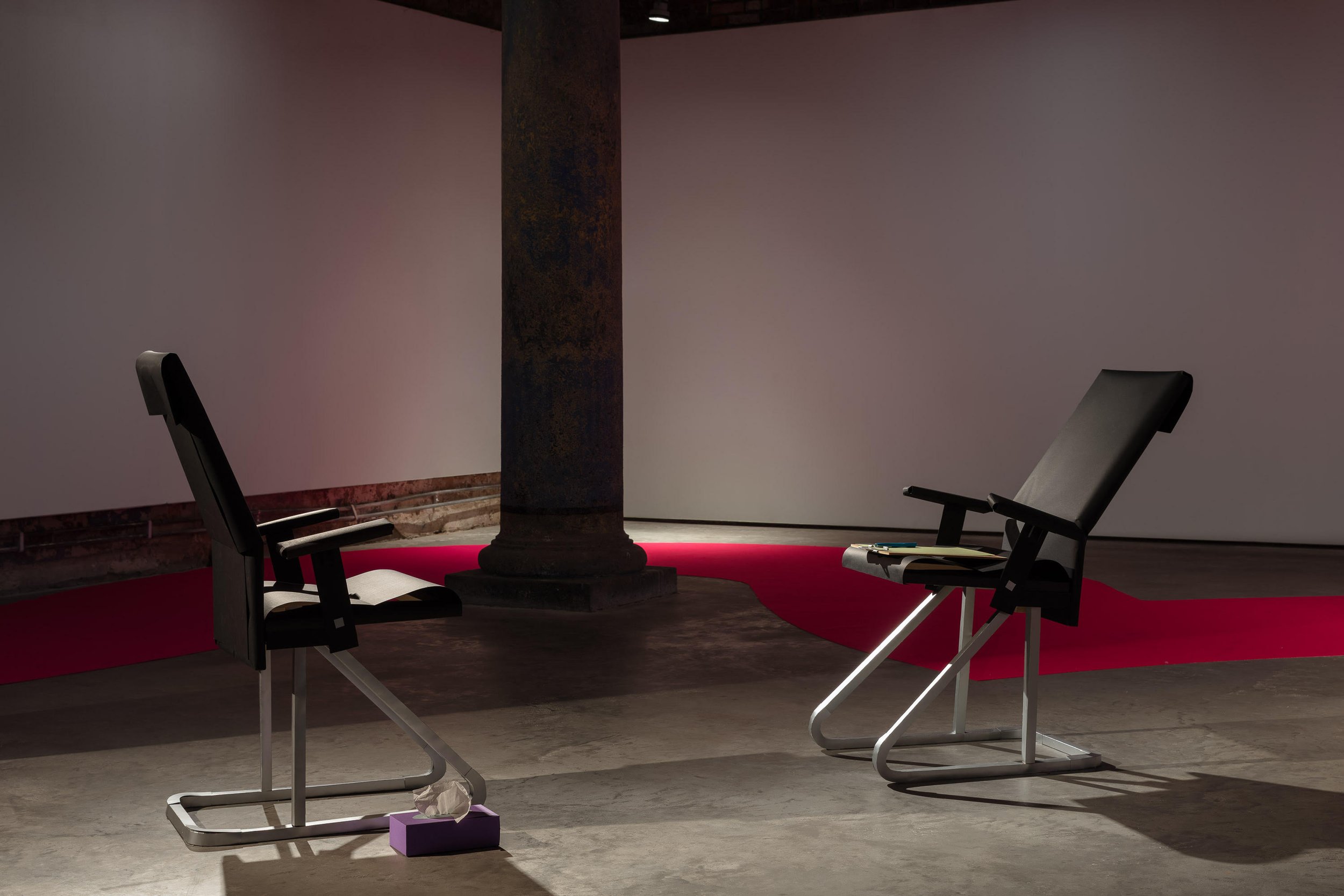
Photo credit: "The Piles We Carry" at UKS, Photo taken by Tor Simen Ulstein, 2025.
Rather than presenting pain as spectacle, this piece asks how pain becomes legible within a foreign system. What happens when one must explain intimate bodily discomfort through another language, another person, or another institution? What is lost, softened, or distorted in that process?
Within the series of Hemorrhoid Loans, this first chapter focuses on the beginning of treatment: the moment when pain enters language, when shame enters a room, and when the body starts to be understood as both a medical and emotional archive. This piece considers therapy as more than a space of conflict or diagnosis. Could it be a space for negotiation, self-reading? A room where power becomes repair.
The exhibition is supported by Forbundet Frie Fotografer, Kulturdirektoratet visual art, Fond og Lyd og Bilde and Norske Billedkunstnere.
Credit:
Translator of Script: Leo Lok-Thing Lim
Voice Actresses: Yue Lu and Mai Mainardi
Special Thanks: Abel Robsahm, Maria Esmeral Henriquez.
About the artist: Orgininally from China, Yu Shuk Pui Bobby, explores the fragile intersections between body, memory and cultural translation; working across moving image, installation, performance and text. She moves fluidly between theoretical inquiry and personal vulnerability in her artistic practice. Her layered narrative spaces weaves together critical perspectives, humour and tender everyday details
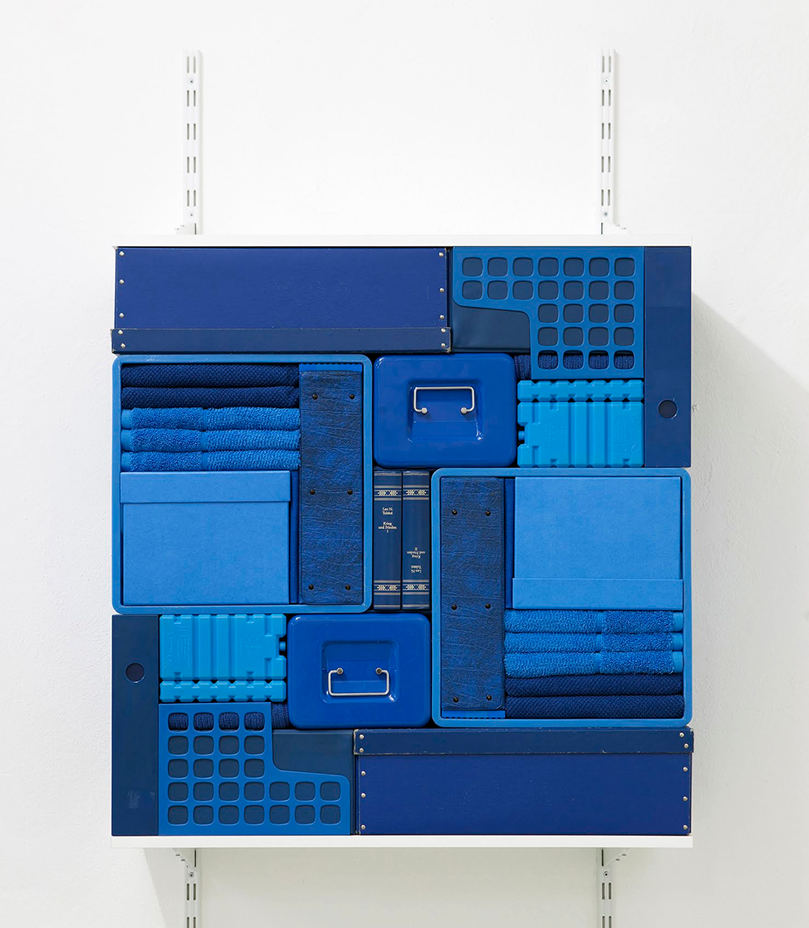
Photo credit: michaeljohansson.com
Michael Johansson
Michael Johansson is a Swedish sculptor and visual artist known for his striking, large-scale installations composed of everyday objects.
For many years I have worked with sorting the objects I collect by colour, creating compressed worlds that differ from the way we usually perceive our surroundings. In my studio I also keep a large shelf where collected objects are stored while waiting to be used. This shelf has been an important working tool for me, visualising both my thoughts and my process. It has also, in various ways, served as the starting point for most of the works I have produced in my studio, where colour and form have been at the centre.
In recent years I have also explored how objects can be used as building elements in more pattern-based works, where the repetition of the same object creates an abstracted and conceptually more challenging image of the material world around us. As in “Never Odd or Even,” where a moving load is tightly packed into a free-standing installation that can be turned upside down — yielding the same work when rotated 180 degrees. For SKOG Art Space I want to develop this concept further, taking an additional step towards abstraction, with a greater focus on the objects I work with as a result.
About the artist
Michael’s work is defined by tightly assembled, cubistic formations in which items are arranged into precise geometric blocks with no empty space. Drawing comparisons to Tetris, Johansson transforms the familiar into something both playful and conceptually rigorous. By imposing order on ordinary materials, he challenges perceptions of space, structure, and function. His installations invite viewers to reconsider the hidden potential and visual harmony within the objects of daily life.
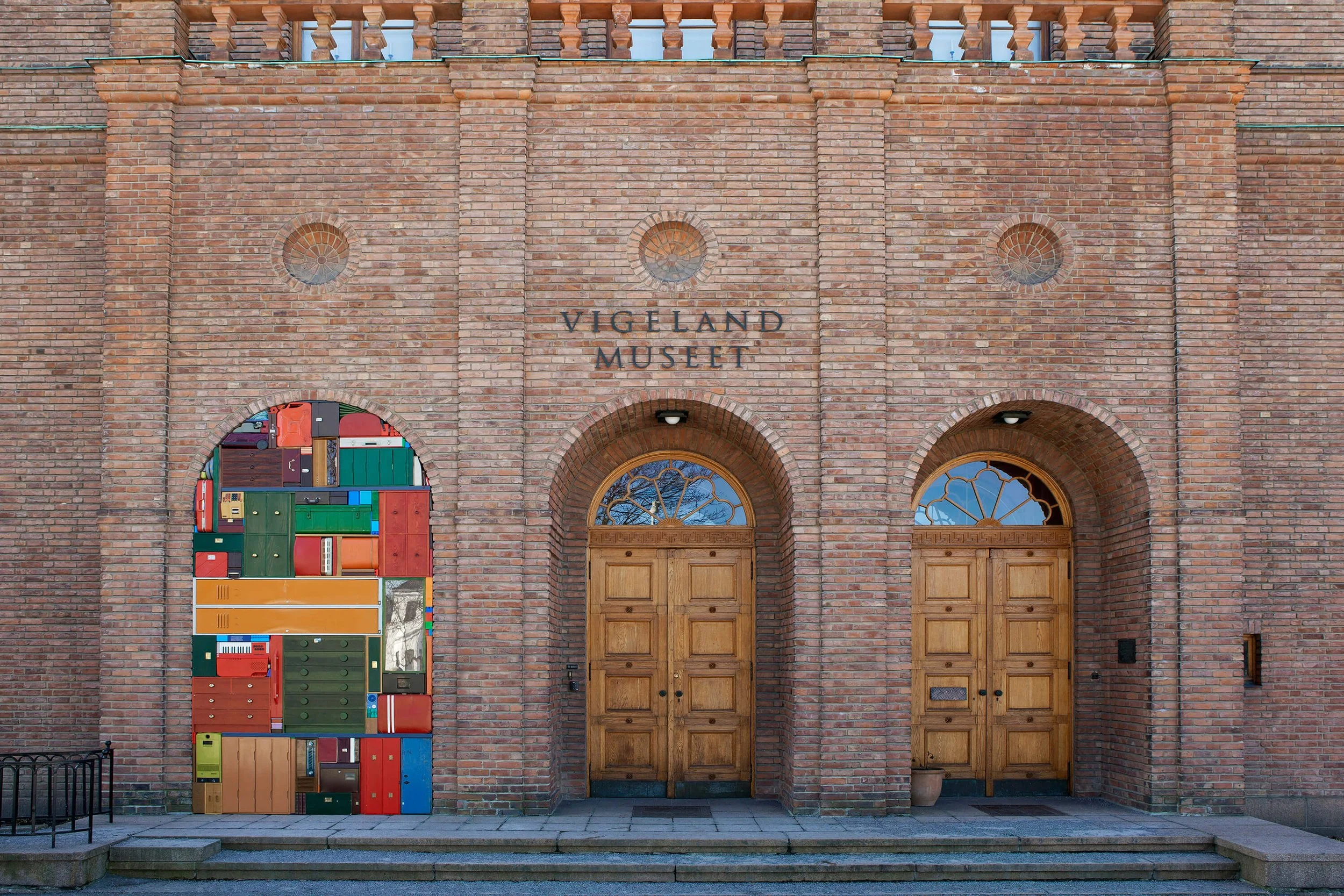
Photo credit: michaeljohansson.com